

My Ace Space
What is My Ace Space?
My Ace Space is a neuroaffirmative framework and suite of tools designed to support and empower children and young people with sensory and emotional self-awareness and regulation.
It helps children recognise and understand their feelings, communicate their needs, feel confident in requesting environmental adaptations, and develop personalised regulation strategies.
It also helps their important adults (family, teachers etc) recognise, understand and empathise with the environmental adjustments their child needs – and feel confident to make these.
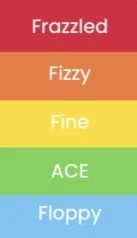
The approach uses a simple, visual, word and colour-based system to represent different emotional and sensory states, creating a shared, affirming and empowering language for children and adults.
“This course has been truly transformative for our family. It gave us practical strategies, deeper understanding, and the confidence to support our autistic child in ways that feel respectful and empowering. I’m so grateful for the guidance and clarity it provided. ”
How the Framework Works
The My Ace Space approach centres on helping children identify how they feel. It is based around five different states (each represented by a colour and word) that correspond to both emotional and sensory experiences.
Children are supported to notice changes in their bodies, identify triggers (or sparks), and explore strategies that help them feel safe and regulated, starting with how their environment can best support them.
All five states are promoted as valid and necessary, depending on what the child is doing, how they feel, and how they want to feel.
Adults are supported to notice subtle changes in behaviour, identify triggers (or sparks), and explore strategies with their child that help them feel regulated and respected. This may mean staying in the state/colour they’re in or shifting to another state/colour, if this is what the child needs and wants.
Each child develops a personalised toolbox that describes activities, strategies, equipment and environments that support their wellbeing.
What My Ace Space offers:
For Families:
All TDC clients will have free access to My Ace Space
Self-guided online training for parents and carers
Practical strategies to support understanding and communication as a family unit
For Schools and Settings:
Training for staff teams
Lesson resources and implementation guidance
Digital Support:
Child-friendly app using visual tools
Helps children identify feelings/states and access regulation strategies
Encourages independence and self-advocacy
“The programme made such a difference to all of us, giving us a language to articulate the changes in our child’s sensory regulation (and ours!)”
Why My Ace Space?
Children with sensory and emotional regulation differences may experience overwhelm caused by environments, activities or expectations that aren’t right for them.
My Ace Space provides a visual, accessible approach that supports early identification of distress, proactive strategies and meaningful environmental adaptations.
It empowers children to understand themselves and communicate their needs clearly.
It encourages adults to learn how to really tune into their child’s emotional and sensory world, and make supportive adaptations, so that life works better for everyone.
Our Approach
Neuroaffirmative and strengths-based
Grounded in both education and clinical expertise – founded by a neurodivergence specialist and a specialist occupational therapist
Practical, flexible and easy to embed
Co-developed with children, families and professionals
Who Is It For?
My Ace Space is designed for children and young people with sensory and emotional regulation needs, including those who are neurodivergent.
It supports families, educators and professionals, recognising that everyone has different but equally valid sensory and emotional needs.
The Impact
Improved self-awareness and independence
Better communication between children and adults
Reduced distress and increased engagement
Calmer, more responsive environments